 专注发泡胶整体解决方案
专注发泡胶整体解决方案
专注发泡胶整体解决方案
Irregular parts and precision instruments are most vulnerable to collision and damage during long-distance logistics. The cost of returns, compensation and complaints caused by damage is often much higher than the packaging itself. Foam-in-place packaging, with its “on-site foaming, contour-conforming” characteristics, has become the choice of more and more manufacturers to reduce transit damage. This article explains its mechanism and applicable scenarios in Q&A format.
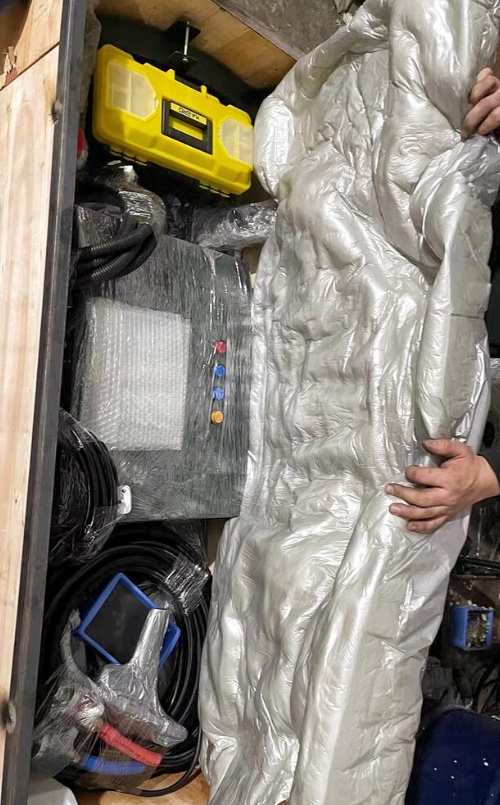
1. 360-degree conforming fixation: Two-component polyurethane materials react on site, and the expanding foam conforms exactly to the product contour, firmly fixing the product inside the package and greatly reducing the risk of collision caused by movement during transit.
2. Strong cushioning and shock absorption: The foam forms a dense cushioning layer that effectively absorbs vibration and impact energy during transportation, especially suitable for high-value, fragile irregular parts.
3. Mould-free adaptation for irregular shapes: Compared with EPE or EPS which requires custom moulds, foam-in-place needs no mould and fits any irregular shape directly, avoiding damage caused by empty space and product shifting.
4. Smaller package volume: Contour-conforming foam makes the overall package more compact. Under equal protection, the carton is smaller, reducing volume occupation and freight cost.
1. No mould required: Obvious advantages in lead time and cost for irregular parts, small batches and frequent change-over.
2. Stronger adaptability: When product specifications change, no mould replacement is needed; simply adjust parameters or switch bag types.
3. Better fit: Foam is generated according to the actual product contour, offering higher conformity than regular sheet splicing.
4. More environmentally friendly: Polyurethane foam can be harmlessly incinerated, and products meet RoHS and REACH export environmental requirements.
Auto parts, pumps & valves, motors & transmission, precision instruments, arts & crafts, hardware and building materials, and other irregular fragile products. From hand-actuated foam bags to CM-811 semi-automatic and CM-812 fully-automatic foaming machines, CosMolar provides solutions for different output levels.
We recommend the “free sample packaging + drop test” approach: send representative samples, the manufacturer completes foam packaging and drop tests, then feedback the results before finalizing the solution. CosMolar supports this process, helping customers make decisions with real measured data before purchasing.
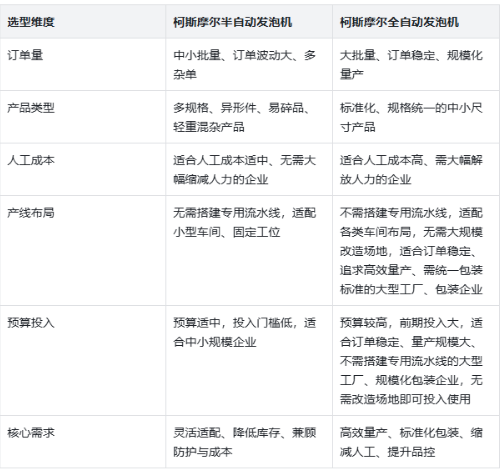
Foam-in-place packaging reduces transit damage through conforming fixation, cushioning, mould-free adaptation and compact volume, while reducing compensation and logistics costs. Choosing a source manufacturer that supplies equipment, consumables, sample testing and after-sales training further ensures solution performance.
Prices are for reference only; final quotation is subject to our sales team's real-time quote. For consultation, please contact CosMolar: Tel +86-400-812-0328 / +86-0755-27807490, website https://www.cosmolar.com/