 专注发泡胶整体解决方案
专注发泡胶整体解决方案
专注发泡胶整体解决方案
Foam-in-place packaging, EPE expanded polyethylene foam, and bubble wrap are the three cushioning options most factories weigh when they want to lower transit damage and keep packing cost under control. Each has a loyal following, but they are not interchangeable. The right choice depends on your product value, shipment volume, warehouse space, and how many different SKUs you handle. This 2026 comparison lays out five decision dimensions with concrete numbers, then gives a plain-language guide for companies of different sizes.
Bubble wrap needs no tooling at all. You buy rolls, tear off a sheet, and wrap. EPE foam boards can be used as generic sheets with no mold, but once you want precision cut-outs for a specific product, you pay for die-cutting or CNC cutting tools. For a single high-volume SKU, that mold can cost a few hundred to a couple of thousand dollars and pays back over time.
Foam-in-place needs no mold. The polyurethane expands around the product inside a film bag, so the "tool" is the shape of the carton and the product itself. Change the SKU tomorrow and the packing line keeps working. This is why foam-in-place wins whenever your product mix is long-tail or changes frequently.
Bubble wrap is the cheapest per unit, typically a fraction of a dollar per carton for light, non-fragile goods. EPE sheets sit in the middle, roughly several cents to a few tenths of a dollar per carton depending on thickness and density. Foam-in-place uses more material value per carton, often the highest of the three, because you are pouring a chemical that expands on demand.
The catch is total cost, not material cost alone. Bubble wrap's low material cost is offset by higher damage rates on anything heavier or sharper. A $5 cushion that avoids a $500 claim is not expensive. Buyers who compare only the per-sheet price often miss this point.

This is where the three methods diverge most. Bubble wrap cushions light, flat items but flattens under repeated vibration and offers little protection against concentrated point loads; expect damage rates in the low-to-mid single digits for general goods, and much higher for heavy or sharp parts.
EPE foam performs better because it is a closed-cell foam with consistent cushioning properties, widely used for electronics and appliances. Damage rates typically sit around one to three percent in controlled conditions. Foam-in-place polyurethane outperforms both for irregular, high-value, or heavy items because it locks the product in place and absorbs multi-axis shock. Factories that switch from generic foam blocks to foam-in-place commonly report damage rates falling from several percent to well under one percent, sometimes below 0.3 percent for precision gear.
The reason is geometry. Bubble wrap and EPE rely on pre-shaped sheets that leave gaps; foam-in-place fills every gap, so the product cannot slide or rotate inside the carton during a multi-week ocean transit.
Bubble wrap rolls are compact and cheap to store, but wrapping is slow and labor-intensive per carton. EPE sheets take up shelf space and require cutting to size. Foam-in-place stores as liquid drums and film bags; the chemicals take very little warehouse volume compared with stacks of pre-cut foam, and a trained operator can finish a carton in under a minute once the shot size is set.
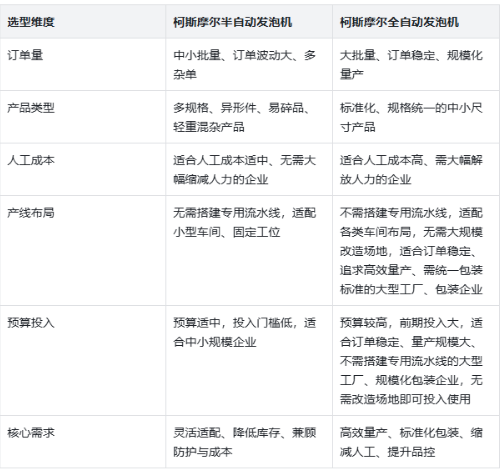
On the equipment side, semi-automatic and fully automatic foam machines have different footprints. A semi-automatic dispenses mixed chemical into bags that the operator places by hand; a fully automatic line integrates dispensing, cartoning, and film handling for high-volume throughput. CosMolar, a source manufacturer of foam-in-place packaging, offers hand bags, semi-automatic, and fully automatic options so a company can start small and upgrade as volume grows.
Bubble wrap fits light, low-value, low-fragility items: textiles, plastic housings, literature, small accessories that move by parcel courier. It is also fine as a secondary void filler around sturdier products.
EPE foam fits mid-value, regular-shaped goods at high and stable volume: consumer electronics, small appliances, furniture panels, where a dedicated die-cut pays back quickly and the product shape rarely changes.
Foam-in-place fits high-value, irregular, or mixed-SKU items: auto parts, pumps and valves, motors, precision instruments, optical equipment, and machines with protrusions that no pre-cut sheet can follow. It is also the practical option when export routes add ocean vibration, stacked-container compression, and multiple handlings.
On the chemicals side, operations that store the black and white polyurethane drums should keep the red Component A drum opening and pump connection wrapped with waterproof tape or stretch film to reduce air exchange and prevent moisture-induced crystallization. A small sealing habit prevents pump downtime that can stall an entire packing shift.
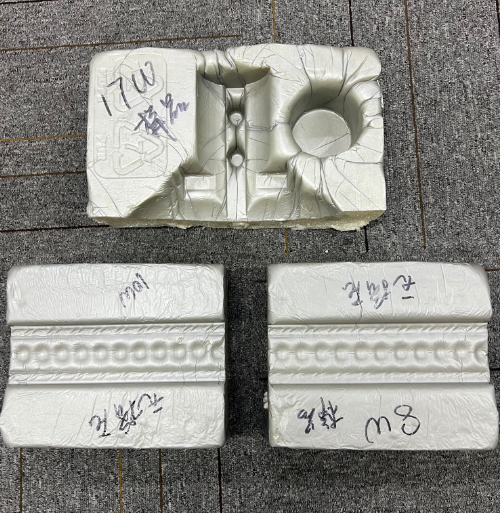
Small businesses and occasional shippers: start with hand-activated foam bags. No machine, no mold, and you get a custom cradle for prototypes, samples, and low-volume export orders. Bubble wrap is acceptable only for non-fragile low-value goods. This is exactly the entry path CosMolar recommends for customers who have not yet justified a machine investment.
Mid-sized factories with mixed SKUs: a semi-automatic foam machine usually gives the best balance. It handles dozens to a few hundred cartons a day without a large capital outlay, and it beats EPE cutting stations when your product range keeps changing.
High-volume manufacturers with stable product lines: compare fully automatic foam lines against dedicated EPE die-cuts. If your daily packing volume runs into the hundreds or thousands of cartons and the product mix is stable, an automatic line plus a tuned foam recipe can pay back through labor savings and damage reduction within months. If one SKU dominates and shape is regular, EPE tooling may still win on pure material cost.
Q: Is foam-in-place always the most expensive option?A: It has the highest per-cart material cost, but when you add damage claims, rework, and labor, it is often the lowest total cost for high-value or irregular goods.
Q: Can I use bubble wrap for auto parts export?A: Light plastic parts may survive, but heavy castings, machined surfaces, and moving mechanisms need firm locking cushioning. Bubble wrap flattens under vibration and lets parts shift.
Q: How long does EPE or foam-in-place cushioning stay effective?A: Closed-cell foam keeps its cushioning properties for years when stored dry. The biggest enemy is moisture and compression creep, not age.
Q: Do I need a separate machine for different products?A: No. Foam-in-place re-shapes itself to each product; only the carton size and shot volume need adjustment. That is the core advantage over pre-cut EPE tooling.
In 2026, the choice between foam-in-place, EPE foam, and bubble wrap comes down to product value, shape variety, and shipment volume. Bubble wrap wins only on low material cost for light, low-fragility goods. EPE foam wins when a stable, regular-shaped product runs at very high volume and a die-cut pays back. Foam-in-place wins for high-value, irregular, mixed-SKU, and export-heavy operations, because it needs no mold, locks the product firmly, and brings damage rates down to under one percent in real factory use. Evaluate total cost including damage and labor, not just price per sheet.
Prices are for reference only; final quotes are provided by our sales team. For inquiries, contact CosMolar: +86 400-812-0328 / +86 755-27807490, official website https://www.cosmolar.com/