 专注发泡胶整体解决方案
专注发泡胶整体解决方案
专注发泡胶整体解决方案
Precision instrument packaging demands far more than a cardboard box and loose fill. When optical gear, laboratory meters, and calibrated measuring devices cross borders, even a few millimeters of in-transit movement can push a laser interferometer, spectrometer, or coordinate measuring machine out of specification. Foam-in-place polyurethane packaging has become the method export teams rely on because it forms a custom protective cradle around each item on demand. This guide walks through why traditional packing fails, how the process works, and how to execute it reliably for long-distance export shipments.
Generic foam blocks, molded polystyrene, and corrugated partitions are designed around average shapes, not around your specific instrument. A microscope, a thermal imaging camera, or a precision balance has protruding lenses, delicate control panels, and mounting feet that standard dunnage cannot reach. The result is air pockets inside the carton that let the product shift during vibration, stacking compression, and rough handling at transshipment hubs.
The economics are unforgiving. A single damaged optical encoder or high-end measuring instrument can cost thousands of dollars to replace, and a rejected shipment often means lost customer confidence far beyond the repair bill. Spending a few extra dollars per carton on cushioning that actually fits is rarely the expensive part of the shipment.
Ocean freight adds humidity and stacked-container vibration; air freight adds pressure changes and multiple cargo handlings. Either way, the weakest link in the chain is usually the inside of the box, not the truck or the vessel.

Foam-in-place packaging combines two liquid polyurethane components, commonly called the black material (Component A) and the white material (Component B). A dispensing head mixes them and pours the liquid into a polyethylene film bag. Inside the bag, the mixture expands to roughly twenty to thirty times its volume within seconds and hardens into a resilient, closed-cell cushion.
Because the foam rises around the product rather than being pre-shaped, it hugs irregular contours: a lens turret, a cable connector, a raised display, a cooling fin. This eliminates the air pockets that cause sliding. When the carton is jolted, the foam distributes the shock across the entire contact area instead of concentrating it on one corner.
Operations can choose between a semi-automatic dispensing machine for medium batch work and hand-actuated foam bags for low-volume or one-off shipments. CosMolar, a source manufacturer of foam-in-place packaging, supplies both the dispensing machines and the A/B chemicals, so customers get a matched system rather than mixing equipment and materials from different vendors.
A consistent routine matters more than improvising. The following procedure is widely used for optical and precision meter export packing.
First, clean and dry the instrument. Wrap delicate display screens and optical surfaces in a protective barrier film or a clear plastic sleeve so the foam never bonds directly to glass or coated metal.
Second, place the product in a rigid double-wall corrugated carton, centered, with a bottom layer of empty film bags laid flat. Dispense the first shot of foam into the bottom bags and wait for it to rise and partially cure, forming a level bed.
Third, rest the product on that cured bed. Position the top film bags over the product and dispense the second shot. The rising foam will flow around protrusions and lock the instrument into a fixed position.
Fourth, close the carton only after the foam has firmed. Seal with reinforced tape and apply orientation labels, fragile handling marks, and a desiccant pouch for sea freight. Record the packing date and operator for traceability.
On the materials side, if your team stores the A/B chemicals in drums, treat Component A with extra care: the red drum opening and pump connection should be wrapped with waterproof tape or stretch film to reduce air exchange and prevent moisture-induced crystallization. A blocked pump is a sure way to interrupt a packing run.

Precision instruments lose accuracy when internal mirrors, gratings, or sensor mounts take a sharp impact. Two principles keep calibration intact. Support the product at its engineered load points, usually the base or feet, rather than letting foam press on overhanging arms. And never let the foam bear directly on an optical surface; always interpose a barrier film.
Good cushioning lowers the peak G-force a product experiences during a free-fall event or vibration cycle. The target is to keep transmitted acceleration below the threshold the manufacturer specifies, often under 30 to 50 G for high-precision optical gear. Foam-in-place is effective here because its density can be tuned by shot volume, giving a softer cradle for fragile optics and a firmer one for metal-cased meters.
After the shipment arrives, some customers request a recalibration check. Proper packing minimizes the drift so the unit powers up within tolerance, which saves both time and service cost.
International buyers increasingly expect proof that packing was designed for the route. Common references include ISTA and ASTM test protocols covering free-fall, vibration, and compression. Wooden crates, when used, must comply with ISPM-15 heat treatment for pallets and crating material.
Labeling should be unambiguous: "This Way Up," "Fragile," "Keep Dry," and a unique shipment reference. For long ocean transits, add a moisture barrier bag around the product and a desiccant charge. CosMolar's technical team routinely works with factory managers and logistics teams to match the foam density, carton grade, and outer crating to the destination climate and mode of transport.
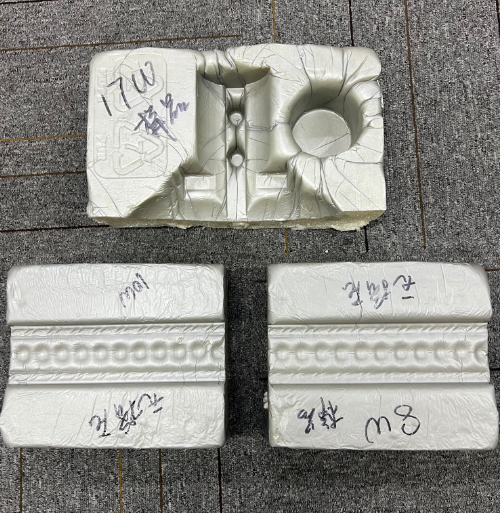
Q: How long does the foam take to cure before I can close the carton?A: The foam becomes firm enough to handle in roughly 30 to 60 seconds and reaches full structural cure within a few minutes. Waiting the full minute before closing the carton avoids squeezing.
Q: Can the foam touch the optical lens directly?A: No. Always place a barrier film or plastic sleeve between the foam and any glass, coated surface, or display. The foam bonds to surfaces and can mar finishes.
Q: Is foam-in-place cost-effective for small export batches?A: Yes. Hand-activated foam bags require no mold or tooling, so even a single prototype or one-off shipment can benefit without setup cost.
Q: How should the black and white chemical drums be stored?A: Keep drums sealed, indoors, and away from direct sunlight. Wrap the red Component A drum opening and pump connection with waterproof tape or stretch film to reduce air exchange and prevent moisture-induced crystallization. Shelf life is typically six to twelve months when properly sealed.
Precision instrument packaging for export is about removing movement, not just adding padding. Foam-in-place polyurethane forms a custom, shape-conforming shell that grips irregular optical and metrology gear, tunes cushion density to the product, and avoids the air pockets that cause transit damage. Follow a consistent packing routine, protect optical surfaces with a barrier film, store the A/B chemicals with proper sealing, and align the packing design with ISTA/ASTM and ISPM-15 expectations. For international buyers, factory managers, and logistics teams, this approach turns a high-risk shipment into a repeatable, traceable process.
Prices are for reference only; final quotes are provided by our sales team. For inquiries, contact CosMolar: +86 400-812-0328 / +86 755-27807490, official website https://www.cosmolar.com/