 专注发泡胶整体解决方案
专注发泡胶整体解决方案
专注发泡胶整体解决方案
Every shipper knows this situation: an urgent order must go out today, the product has an awkward shape that foam boards never match, or a single high-value item needs extra care but a foam machine feels like too much investment. Expanding foam bags solve all three problems at once — no machine, no power supply, no training. Squeeze, pat, place, and in minutes you have a custom cushion that wraps the product like a glove. This guide explains what expanding foam bags are, how to use them, what they are good for, and what they cost.
Expanding foam bags, also called hand-activated foam bags or press-and-release foam bags, are pre-packaged pouches that hold the two components of polyurethane foam (A-side and B-side chemicals). You break the inner seal, pat the bag to mix the chemicals, and the liquid expands within seconds into a soft, shock-absorbing cushion. Because the foam grows around the product, it fits the exact outline — no cutting, no measuring, no molds. In short, it brings foam-in-place packaging to your desk, with zero equipment.
Step 1 — Unfold: spread the bag flat on a table with the marked side facing up;
Step 2 — Activate: press firmly on the A area to break the inner seal (you will hear a pop);
Step 3 — Mix: pat the A and B areas alternately with both hands about 15-25 times in roughly 8 seconds until the bag starts to warm and expand;
Step 4 — Place: put the bag into the carton quickly, before the foam fully rises, and set the product on top so the growing foam cradles its base and sides;
Step 5 — Cover: activate a second bag the same way, place it over the product, close the carton and wait a few minutes for the foam to cure.
This two-bag sandwich method — one cushion below, one on top — locks the product in place and gives the best drop protection.
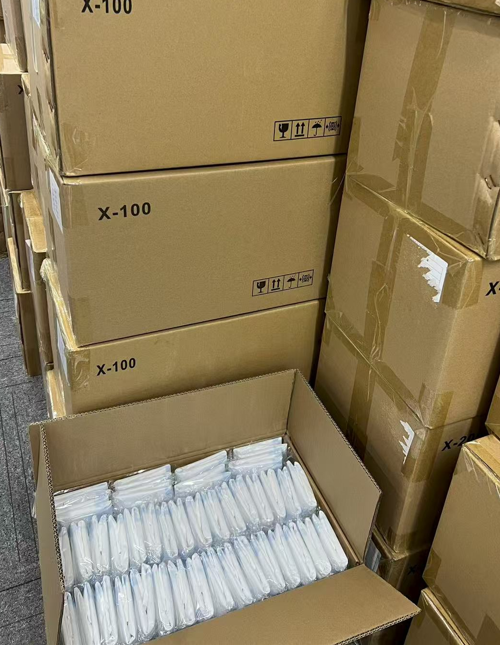
Based on real-world use, expanding foam bags fit four situations best:
1. High-value single items: desktop computers, servers, instruments and medical devices, where one damaged shipment costs far more than the packaging;
2. Odd-shaped and fragile goods: ceramics, glassware, sculptures, valves and pumps — shapes that foam boards simply cannot match without custom cutting;
3. Samples and urgent orders: prototypes, trade-show samples and rush shipments that cannot wait for custom packaging;
4. Low-volume mixed packing: a few dozen packs a day with constantly changing products, where a machine is hard to justify and bags give flexibility.
Courier networks use this exact type of foam bag when packing desktop PCs, which shows the protection has been proven in daily logistics.

Expanding foam bags are priced by size. Common sizes range from roughly 350×410 mm up to 530×620 mm; smaller bags cost a few US dollars each and larger ones more, depending on quantity. Compared with bubble wrap or PE foam sheets, the unit price looks higher — but two things change the math: the bag fits the product exactly, so there is no wasted material and no labor for cutting; and you do not have to stock dozens of foam sheet sizes.
The real question is total cost. For samples, urgent orders and small volumes, the flexibility of foam bags is the biggest saving. Once volume grows to a hundred or two hundred packs a day, a semi-automatic foam machine dispenses chemicals on demand and brings the cost per pack clearly lower — and the machine pays back quickly.
Simple rule: small volume, use bags; bigger volume, use a machine.
| Factor | Expanding foam bags | Semi-automatic machine | Fully automatic machine |
| Equipment cost | None | One machine | One machine, higher |
| Cost per pack | Higher | Medium to low | Low |
| Packing speed | A few minutes per pack | 200-300 packs per day | Production line output |
| Best for | Samples, urgent, low volume | Steady mid-volume workstations | High-volume standardized lines |

Q: Are expanding foam bags eco-friendly?A: Once cured, polyurethane foam is a stable polymer material that is not toxic itself and meets general export packaging requirements. A slight odor right after foaming is normal; it dissipates in a ventilated area.
Q: Can I reuse a foam bag?A: No, each bag is single-use — that is exactly why every cushion is custom-fit to the product.
Q: Does foaming slow down in cold weather?A: Low temperature slows the reaction. Operate at room temperature, or warm the bag briefly before activation.
Q: Where can I buy reliable expanding foam bags?A: Choose a source factory that produces both foam machines and chemicals. Formula quality and bag sealing both matter, and a manufacturer can guarantee stable supply.
Expanding foam bags are the lowest-threshold entry into foam-in-place packaging: zero equipment, instant use, perfect fit, perfect for samples, urgent orders, odd shapes and high-value items. When volume grows, upgrading to semi-automatic or fully automatic foam machines lowers the cost per pack further. CosMolar, a source factory for foam-in-place packaging, supplies expanding foam bags, semi-automatic and fully automatic foam machines, A/B chemicals and film in one package, with free sampling so you can test with your own product before you commit.
Prices are for reference only; final quotes come from our sales team. Contact CosMolar: 400-812-0328 / 0755-27807490, official website https://www.cosmolar.com/