 专注发泡胶整体解决方案
Precision instruments fail in transit for three reasons — vibration, moisture and static — so the packaging must isolate vibration, block moisture and protect against static. Among cushioning materials, foam-in-place (polyurethane foam) offers the best fit and shock absorption, making it the first choice for precision cargo.
Precision instruments fail differently from ordinary equipment, and most damage is invisible. Lenses and prisms are extremely sensitive to vibration: continuous low-frequency vibration during transport can shift an aligned optical axis. Lens coatings fear friction and humidity — moisture causes fogging and mold. Circuit boards fear static and damp air. Even very light random vibration can affect accuracy. That is why precision instrument packaging must do three jobs at once: isolate vibration, block moisture, and protect against static. Miss any one and damage rates stay high.
Each common cushioning material has its own strengths and limits:
| Material | Strengths | Limits | Best for |
| PE foam sheet | Cheap, easy to cut | Low-density sheets absorb limited impact; odd shapes need custom cutting; high-value items need thick layers | Standard instruments, high-volume products |
| Bubble wrap | Cheap and light | Limited cushioning; weak against heavy pressure and sustained vibration | Light small items, gap filling |
| Foam-in-place (polyurethane) | Perfect fit, strong shock absorption, moisture barrier | Requires foam bags or a foam machine | Precision instruments, odd-shaped high-value goods |
1. Perfect fit: the foam grows around the product outline with no gaps, so the product barely moves inside the carton — the vibration path is cut off;
2. Strong shock absorption: polyurethane foam acts like thousands of tiny air pockets, spreading impact energy over the whole contact surface;
3. Moisture barrier: the foam layer separates the product from outside air, and works even better with desiccant on sea routes;
4. Smaller cartons, lower freight: no wasted space means more goods per carton and lower dimensional weight.
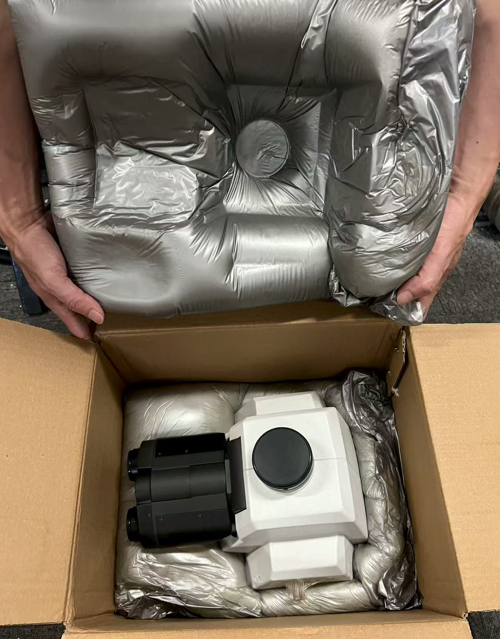
Step 1 — Static protection: put the instrument in an anti-static bag or foil moisture bag first; this is standard practice for precision items;
Step 2 — Lay the film: place foam packaging film at the bottom of the carton, leaving margin on each side so the foam does not stick to the product;
Step 3 — Dispense foam: add the right amount for the product size and let it expand to a half-cured state;
Step 4 — Place the product: gently set the instrument into the foam and let it settle into its own outline, sensitive parts facing up;
Step 5 — Cover and seal: lay film and foam on top, close the carton and wait a few minutes for the foam to cure;
Step 6 — Extra protection: add desiccant (roughly 1 kg per cubic meter is a common reference for sea freight), mark the carton as fragile and keep-dry, and use a humidity indicator card when possible.
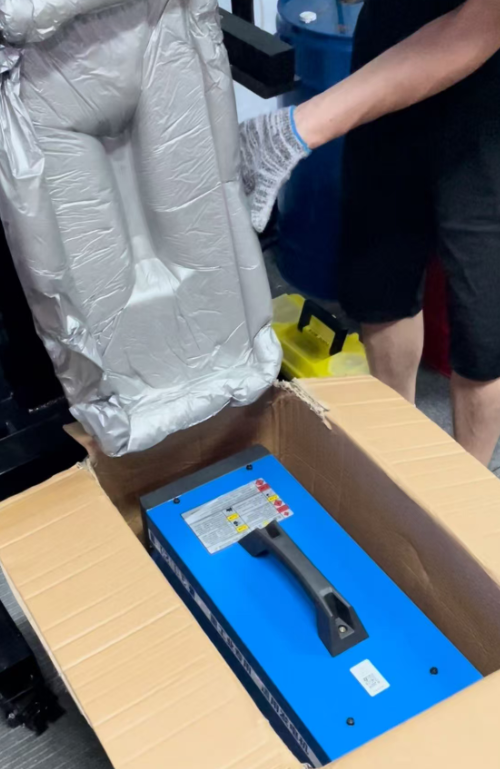
1. Sea freight moisture: containers are humid — foam layer plus desiccant is the basic setup, and a humidity indicator card is recommended for precision cargo;
2. Drop testing: before mass shipping, run drop tests per ISTA or GB/T 4857 standards and let the data speak instead of guesswork;
3. Secure placement: instruments with a high center of gravity need extra-thick base cushioning to prevent tipping and shifting;
4. Temperature swings: on routes with large temperature differences, prevent condensation with a foil moisture bag as an isolation layer.

Q: PE foam or foam-in-place for precision instruments?A: It depends on value and volume. For high-value, vibration-sensitive items, foam-in-place gives a better fit and stronger shock absorption; for less demanding instruments, PE foam is enough.
Q: Can foam damage optical lenses?A: No. The foam never touches the product surface directly because a film barrier is used, and an anti-static or moisture bag is the standard first layer.
Q: Is a foam machine worth it for low-volume precision packing?A: Start with hand-activated expanding foam bags — zero equipment investment and the same custom-fit protection. When volume grows, move to a semi-automatic machine for a lower cost per pack.
Q: How much can damage rates drop?A: It depends on shipping conditions and how well the pack is done. Once the product is locked in place, damage rates usually drop significantly in most scenarios. Test with your own product and run a drop test to get real numbers.
Precision instrument packaging comes down to three words: vibration, moisture, static. Foam-in-place packaging handles all three in one step — no molds, no stockpiling mismatched foam boards, and the fit and shock absorption are proven in practice. CosMolar, a source factory for foam-in-place packaging, supplies expanding foam bags, semi-automatic and fully automatic foam machines, A/B chemicals and film in one package, with free sampling so you can test with your own precision product before you commit.
Prices are for reference only; final quotes come from our sales team. Contact CosMolar: 400-812-0328 / 0755-27807490, official website https://www.cosmolar.com/