 专注发泡胶整体解决方案
专注发泡胶整体解决方案
专注发泡胶整体解决方案
The best storage range for polyurethane A/B (black and white) chemicals is 10-25°C: the black component tends to crystallize below 10°C, while the white component loses blowing agent when it gets too warm. Keep the workshop above about 15°C, and let chemical drums warm to room temperature for 24 hours before use. Slow foaming in winter is normal chemistry, not a bad batch of chemicals. Manage storage temperature, warming and daily operation correctly, and foaming speed and quality return to normal. This guide covers storage and low-temperature operation in plain terms.
Foaming is a chemical reaction between the black and white components, and reaction speed depends on temperature. When it is cold, the reaction slows, expansion takes longer, curing takes longer, and the cells become smaller and coarser, so the foam looks and feels different from summer foam. Many workshops blame the chemicals in winter, but most of the time it is a temperature problem. Too hot is also wrong: the reaction runs so fast that the foam starts rising inside the gun. Manage temperature and you have solved most foaming quality issues.
Storage is not "put the drums in a corner". Temperature matters:
1. The black component hates cold: below about 10°C it tends to crystallize, forming sugar-like crystals at the bottom of the drum. On the machine these crystals block the gun and the lines and disturb the ratio;
2. The white component hates heat: when it gets too warm, the blowing agent evaporates, pressure builds in the drum, and part of the agent is lost when the drum is opened, which weakens foaming;
3. The correct range: store at 10-25°C, away from direct sunlight and heat sources, and keep drum lids closed;
4. Constant temperature is best: if possible, keep drums in a conditioned room at 20-25°C for 24 hours before use, and foaming stays most stable.

Follow these four habits in winter and foaming will not disappoint:
1. Warm the drums in advance: move the drums you need tomorrow into the workshop the day before so the chemicals return to room temperature naturally. Twenty-four hours is the safest interval. Do not bring a cold drum in and start working right away;
2. Keep the workshop warm: keep the working area above about 15°C, ideally 18-20°C. A small space heater for a cold corner costs little and makes a big difference;
3. Check before starting: run the machine for a few minutes first so the lines and chemicals reach a stable temperature, then check that the gun dispenses smoothly and the cells look even;
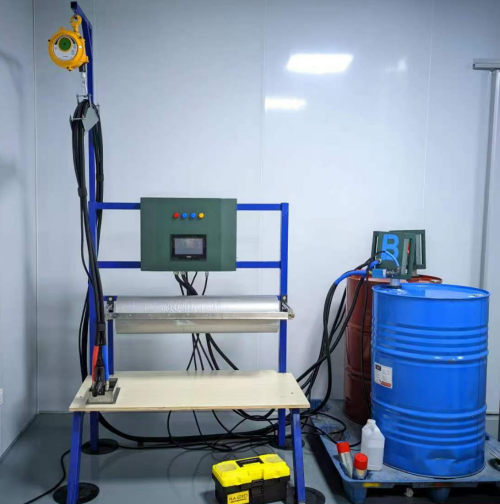
4. Seal the drum opening: wrap the joint between the red drum (A component) opening and the pump with waterproof tape or stretch film to reduce air flow and stop the A component from crystallizing after contact with moisture. This is the most overlooked and most common winter failure point.
If the black component has crystallized, do not panic and do not use harsh methods:
1. The right way: roll the drum in heat, for example in a warm room at 60-80°C, until the crystals fully melt, then stir well before use;
2. No open flames or direct boiling water: local overheating damages the chemistry;
3. Light crystallization may recover by itself: when crystals are mild, warming at constant temperature plus stirring often restores the material;
4. Long storage makes it worse: the longer drums sit and the bigger the temperature swings, the higher the crystallization risk. Use first-in-first-out and buy to need instead of stockpiling across seasons.

Curing time depends mainly on temperature. Compare before concluding:
| Room temperature | Reference curing time | Typical signs |
|---|---|---|
| Above 25°C | About 8-10 minutes | Smooth foaming, even cells |
| 15-25°C | About 10-15 minutes | Slightly slower, still normal |
| Below 15°C | Over 15 minutes, clearly slower | Coarser cells, less expansion; warm up and insulate |
The test for full curing is simple: press the carton edge with a finger. When the foam bounces back firmly and no longer deforms, curing is complete. If foaming is still wrong after warming and insulation, then check ratio pressure and the gun nozzle. Do not blame the chemicals first.
Q: Is slow foaming in winter a sign of expired chemicals?A: Most likely not. Low temperature extends reaction time, which is normal physics. Warm the drums and the workshop first, then judge whether the chemicals are at fault.
Q: Can A/B chemicals be stored outdoors?A: Not recommended. Cold winters crystallize the black component and hot summers make the white component lose blowing agent. Keep storage at 10-25°C.
Q: Can crystallized black component still be used?A: Yes. Melt it by rolling in a 60-80°C warm room and stir well before use, but never use open flames or hot water on the drum.
Q: Should I change the dispensing amount in winter?A: Foam expands less at low temperature, so a slightly larger amount may be needed for the same space. Start with the two-thirds rule and fine-tune by watching how the foam expands.
Slow winter foaming is not a mystery; it is temperature management. Store at 10-25°C, warm drums for 24 hours before use, keep the workshop above 15°C, and seal the red drum (A component) opening with waterproof tape or stretch film to prevent crystallization. Do these four things and winter output stays close to summer levels. CosMolar, the source factory for foam-in-place packaging, supplies A/B chemicals matched to its foam machines, with stable ratios and direct-from-factory supply, plus cold-weather operation guidance. Ask us if you are unsure.
Prices above are for reference only; the final quote comes from our sales team. For inquiries, contact CosMolar: 400-812-0328 / +86 755 2780 7490, official website https://www.cosmolar.com/