 专注发泡胶整体解决方案
专注发泡胶整体解决方案
专注发泡胶整体解决方案
Machinery is hard to pack for three reasons: irregular shapes do not fit standard cushions, heavy parts carry more impact force, and precision surfaces scratch easily. Foam-in-place packaging forms the cushion right around the product, heavy items get a thicker base with a second injection, and the foam locks the equipment so tightly it cannot shift. CosMolar supports machinery manufacturers with a clear path: free trial packing, a finalized solution, operator training, and continuous chemical and film supply for production. Four steps, and customers go from trial to production without guessing. This article explains how the approach works in real production.
Almost every machinery maker meets these three issues. First, irregular shapes: equipment is rarely a clean box, so foam board never matches the outline, gaps leave room to move, and the product shifts in transit. Second, weight: heavy equipment has more inertia, so the same vibration creates far more force, and corner padding alone cannot hold it. Third, surface precision: machined faces, guide rails and enclosures reject even small scratches, and a scratched part means returns and rework that cost far more than the packaging itself. Machinery packaging therefore has to lock the product, not just cover it.
Foam-in-place works differently from foam board. Instead of fitting a ready-made material to the product, the foam grows into the product's own shape. Place the equipment in the carton, inject the foam, and it expands into every corner and gap, forming a cushion that matches the outline exactly. That solves the irregular-shape problem. For heavy items, inject a thick base layer first, wait for partial curing, place the product, then inject around the sides — the base carries the weight and the sides stop movement. The cured foam also resists moisture, which helps on long ocean voyages.
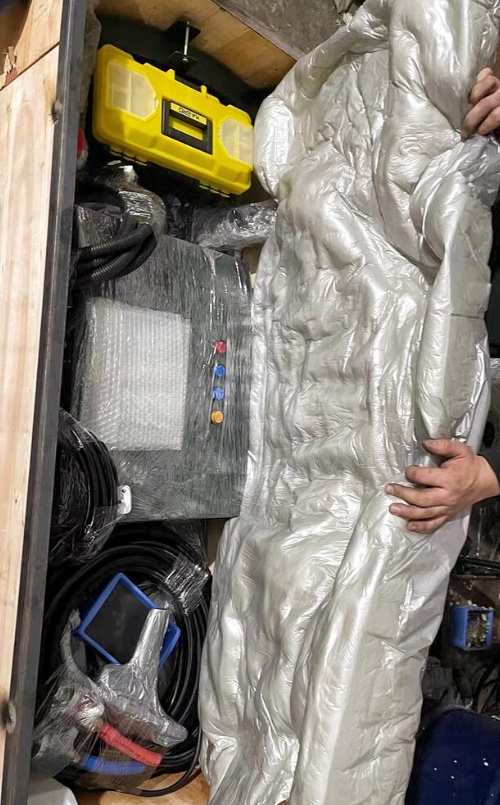
Machinery makers worry that "the solution sounds good but nobody follows up". CosMolar uses a four-step path:
Step 1, free trial packing: send a product or sample, or bring it to the plant, pack it on the spot and run a drop test — the result speaks for itself;
Step 2, finalize the solution: based on weight, shape and shipping volume, decide between foam bags, a semi-automatic machine or a fully automatic line, and fix the cushion structure and injection settings;
Step 3, training: when the machine arrives, an operator is trained from warm-up to dispensing amount, nozzle cleaning and daily maintenance — half a day is enough for one person;
Step 4, production support: A/B chemicals and film rolls are supplied continuously, and questions are answered as they come up, so customers never have to hunt for consumables.
These machinery categories use foam-in-place most often:
1. General machinery and electromechanical equipment: irregular housings and protruding parts get full-wrap cushioning that stays stable in export containers;
2. Robots and automation components: joints, cables and control cabinets are protected from impact, with no force on wiring points;
3. Radiators and heat exchangers: fins are protected by foam filling the gaps between them;
4. Instruments and precision parts: combined with moisture film and desiccant for both cushioning and humidity control.
Customers consistently say the same thing: with foam board and wood crates, materials were costly, labor was heavy and returns kept coming; after switching to foam-in-place, damage fell, packing became faster, and the warehouse no longer piles up wasted off-cuts.
| Shipping scenario | Recommended setup | Notes |
|---|---|---|
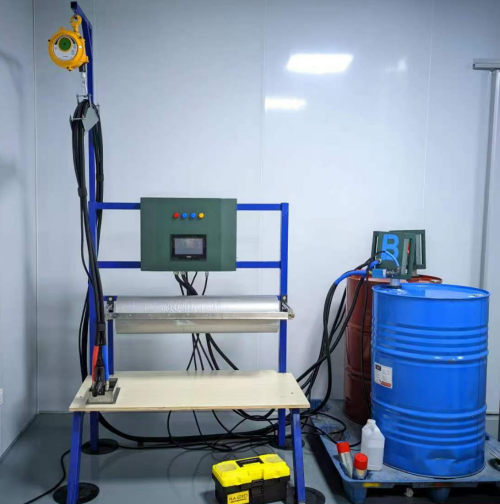
| Prototypes, small batches, occasional shipping | Hand-activated foam bags | No machine, ready to use, controlled cost per pack |
| Dozens to a few hundred packs per day | Semi-automatic foam machine | One operator, automatic A/B ratio control, 40-80 packs per hour |
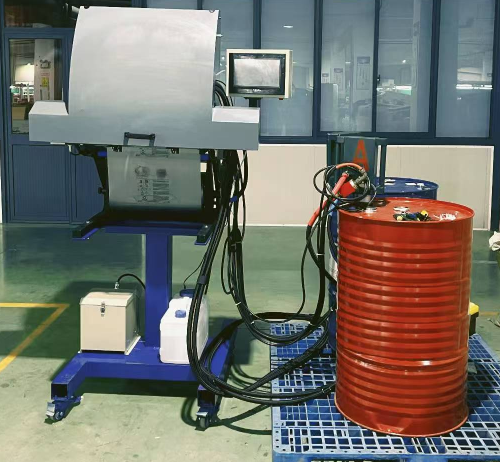
| Line-scale large volume | Fully automatic foam machine | Continuous, steady output for standard processes |
The rule is simple: follow the volume. Validate the solution at small scale first, then upgrade equipment as volume grows. It is more reliable than buying the biggest machine from day one.
Q: The equipment is heavy. Will the foam hold it?A: Heavy items get a thicker base, with a denser foam grade when needed. For very large or very heavy equipment, run a drop test first to confirm the solution.
Q: Is trial packing free?A: CosMolar supports free sampling. Bring your product or send a sample for a trial pack, and talk business only when the solution fits.
Q: Nobody knows how to run the machine after delivery?A: Training is arranged when the machine arrives, covering start-up, dispensing, cleaning and maintenance. Half a day is enough to get started.
Q: Do we need to find our own chemical and film suppliers?A: No. CosMolar supplies machines, A/B chemicals and film rolls as one package, so consumables match the equipment and the ratio stays stable.
Machinery damage in transit is usually not bad luck; the packaging was simply not locked tight enough. Foam-in-place forms around the product, builds a base for heavy parts and resists moisture, and with the path of free trial, finalized solution, training and production support, a machinery maker can get packaging right in one pass. CosMolar, the source factory for foam-in-place packaging, focuses on cushion packaging for machinery and electromechanical products. Bring your equipment for a trial pack — let the drop test do the talking.
Prices above are for reference only; the final quote comes from our sales team. For inquiries, contact CosMolar: 400-812-0328 / +86 755 2780 7490, official website https://www.cosmolar.com/