 专注发泡胶整体解决方案
专注发泡胶整体解决方案
专注发泡胶整体解决方案
Choosing expanding foam bags comes down to three rules: match the spec to the product weight, choose a thicker-density bag for fragile or heavy items, and buy small quantities when your volume is low. Expanding foam bags are the easiest entry point into foam-in-place packaging — no machine, no mold, the two chemicals are sealed inside the bag and react when you press it. This guide explains how to choose the right spec and what thick-duty foam bags can really protect, based on real shipping scenarios.
An expanding foam bag (also called a hand-tap foam bag) has polyurethane A/B chemicals sealed inside a composite pouch. When you press the bag, the two chemicals mix and foam up on the spot. You place the product in while the foam is still soft, press gently for a few seconds, and the foam cures around the product in a custom-fit cushion. No equipment, no mold — the foam expands within seconds and cures in about 30 to 40 seconds, so one pack is done quickly.
They suit warehouses, e-commerce sellers, courier services and small export orders: any business that ships small volumes of irregular or fragile items. Instruments, appliance parts, hardware, crafts and art pieces are typical items protected by foam bags.
CosMolar expanding foam bags come in 18 specs, from X-60 to X-1800; the number indicates the expanded foam volume. Choose mainly by product size and weight: a bag too small cannot wrap the item, a bag too large wastes material.
| Spec Range | Typical Items | Positioning |
|---|---|---|
| X-60 to X-200 | Small precision parts, instrument fittings, small hardware, bottles | Small wrap, lowest cost per bag |
| X-300 to X-800 | Appliance parts, motors, small valves, instruments | Medium size, main range for e-commerce orders |
| X-1000 to X-1800 | Larger equipment parts, multi-item packs, heavy items | Large wrap, good for heavy or bundled items |
If you are unsure, estimate the bag size as "longest product side plus 5-8 cm", then check the spec sheet. Or simply send samples for a free trial — CosMolar offers free sample packaging, so you can measure the actual fit and material usage before ordering.
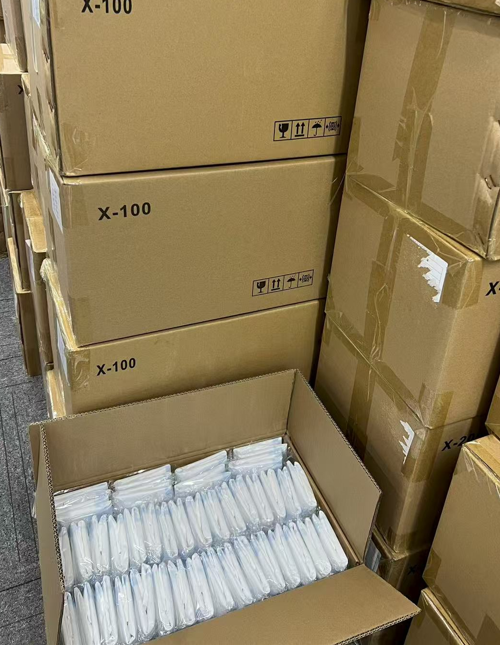
"Thick-duty" does not mean a thicker bag film; it means higher foam density and more material, producing a firmer, thicker foam layer with stronger rebound support. Field results show thick-duty bags help most in three cases: heavier metal parts that would otherwise sink through a standard cushion; long-distance shipments with multiple hand-offs where extra cushioning matters; and products with sharp edges that could cut a thin foam layer.
When checking protection, look at three things rather than thickness alone: foam density (CosMolar offers 6, 17 and 23 kg/m³), the cured foam thickness, and rebound speed. Fast rebound and resistance to compression indicate good material and a sufficient formula.

Protection quality depends half on the material and half on the technique. Follow these four steps:
1. Press alternately left and right 15-20 times so the A/B chemicals mix thoroughly; you will hear a soft "pop" as the reaction starts;
2. Place the bag in the carton immediately, as a base layer or around the sides;
3. Put the product in and adjust its position while the foam is still soft;
4. Press the product gently for 3-5 seconds to let the foam conform, then add the top layer if needed.
Do not over-press the bag — squeezing it flat reduces cushioning. And do not move the product after the foam cures, or you will break the conformed structure.
Expanding foam bags cost from about USD 0.8 to USD 8 per bag at retail, depending on the spec (X-60 to X-1800), so they are far cheaper than molds or stocking many buffer sizes when your volume is low. Once your daily volume reaches dozens of packs, consider upgrading to a semi-automatic foam machine with drum chemicals to lower the per-pack cost further.
One storage tip if you upgrade to drum chemicals: keep the red drum (Part A) sealed properly — wrap waterproof tape or stretch film around the joint between the drum opening and the pump to reduce air flow, so the Part A material does not absorb moisture and crystallize, which would harm foam quality.

Q: How heavy an item can an expanding foam bag protect?A: It depends on the spec and density. For heavy items choose a larger spec and a thick-duty bag, and run a trial pack first. CosMolar offers free sample packaging, so you can verify before you commit.
Q: Are foam bags waterproof and moisture-proof?A: The closed-cell foam provides some moisture resistance. For moisture-sensitive products, wrap the item in film first, then foam around it.
Q: Can foam bags and foam machines be used together?A: Yes. Many customers start with foam bags for small batches and move to a semi-automatic machine as volume grows. CosMolar supplies both, so you can scale up without changing suppliers.
Q: Are expanding foam bags eco-friendly?A: Polyurethane foam is recyclable and compressible. CosMolar materials meet relevant environmental requirements, and waste foam can be compacted and recycled.
Choose expanding foam bags by three rules: match the spec to weight, choose thick-duty for fragile items, and buy small when volume is low. Press 15-20 times, wait for the "pop", place the product, and press 3-5 seconds to set — protection holds. CosMolar, a foam-in-place packaging manufacturer, supplies 18 bag specs with thick-duty options, plus A/B chemicals, foam machines and film in one stop, with free sample packaging. Test with your own products before deciding.
Prices are for reference only; final quotes are provided by our sales team. For inquiries, contact CosMolar: 400-812-0328 / 0755-27807490, official website https://www.cosmolar.com/