 专注发泡胶整体解决方案
专注发泡胶整体解决方案
专注发泡胶整体解决方案
Foam-in-place packaging has moved from a niche novelty in industrial shipping to a mainstream cushioning method, driven by three forces: rising e-commerce and cross-border parcel volumes, stricter environmental compliance requirements, and steady improvement in dispensing equipment. For B2B buyers evaluating a polyurethane packing system in 2026, the decision is no longer "should we switch to foam-in-place" but "which machine, which material, and how do we verify compliance." This guide breaks down the standards landscape, the semi-automatic vs fully automatic tradeoff, and the technical parameters that actually matter.
Environmental Standards: RoHS, REACH & What Buyers Should Verify
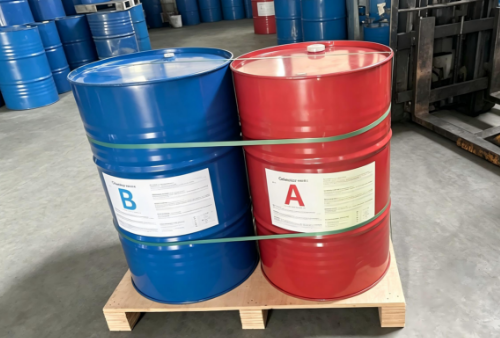
Polyurethane foam itself is generally compliant with the major global restricted-substances frameworks, but the raw materials and additives used in different formulations vary. Buyers shipping into the EU, US, or automotive supply chain should ask suppliers for documentation covering RoHS 2.0 (restriction of hazardous substances in electrical and electronic equipment) and REACH (EC regulation on chemicals, including the SVHC candidate list). CosMolar supplies AB foam material (black/white components) that is formulated to meet RoHS and REACH requirements, and provides test reports on request. Two additional points worth checking: (1) does the foam use CFC- or HCFC-free blowing agents (required in most developed markets), and (2) can the foam be labeled recyclable—modern closed-cell PU foam can be collected, ground, and reused in non-critical applications, which matters for customers with green procurement policies.
Foam Density: 6, 17, or 23 kg/m³ — Which Grade Fits Your Product?
Density is the single most important material parameter, and it is often mis-selected. The 6 kg/m³ grade is soft, light, and best for low-weight, delicate items—optics, glass instruments, finished electronics—where you want a yielding cushion that absorbs shock without pressing on surfaces. The 17 kg/m³ grade is the general-purpose workhorse: mid-weight auto parts, pump bodies, machined housings, and most industrial components. The 23 kg/m³ grade is firm, structural, and used for heavy machinery, castings, and items that need blocking and bracing rather than pure cushioning. Mixing densities (e.g., a 6 kg/m³ top cap over a 17 kg/m³ bottom bed) is a common trick for sensitive products. A reputable supplier should help buyers choose the right grade based on product weight, drop height, and fragility rating rather than pushing the cheapest material.
Semi-Automatic vs Fully Automatic Foam Machines: How to Choose
This is the most common buying question. The answer depends on throughput, product-mix complexity, labor cost, and capital budget.
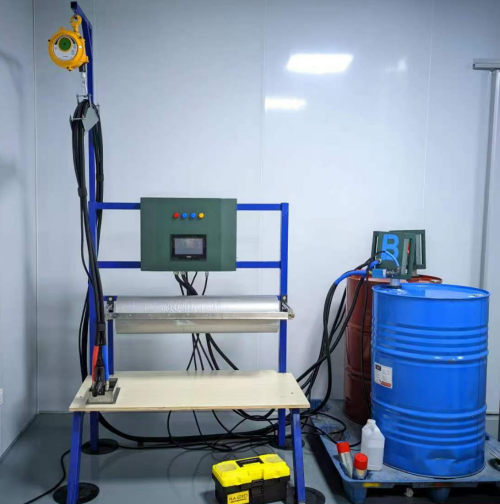
Semi-automatic machines (CM-811, CM-816). The operator positions the product in the carton and pulls the dispensing trigger. Throughput runs roughly 1–2 boxes per minute per operator. Capital cost is lower (in the RMB 20k–25k range for the base unit), and the line is extremely flexible—operators can handle dozens of different SKUs in a single shift with no retooling. This format suits high-mix / mid-volume packers, spare-parts distribution centers, custom-equipment manufacturers, and any operation where product geometry changes daily. The tradeoff is that output depends on operator speed and consistency.
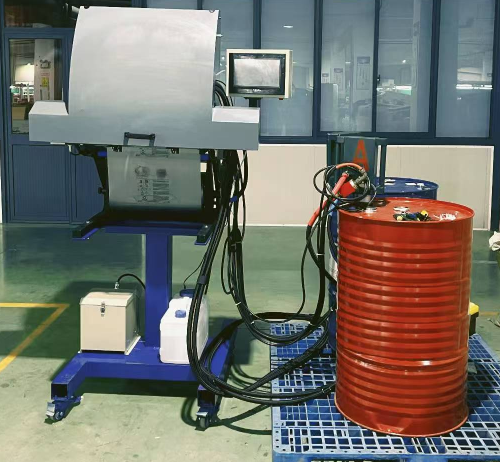
Fully automatic machines (CM-812). The machine dispenses foam in pre-programmed cycles—time, volume, pattern—with no manual trigger. Throughput rises to 3–6 boxes per minute, and every box is identical, which is critical for QA in high-volume, single-SKU lines. Capital cost is higher (around RMB 63,000 for the base unit, consumables extra), and the line rewards dedicated SKU runs rather than daily changeovers. This format suits mass-production OEMs shipping thousands of units of the same product, or contract packers running long production campaigns.
A practical rule of thumb: if your packing line handles fewer than ~200 boxes of the same SKU per day, start with semi-automatic. If you run 500+ boxes of a stable SKU per day and labor cost is rising, automate. Many buyers start with a semi-automatic unit to validate the concept, then add a fully automatic system for their top SKU within 6–12 months.
Equipment Tech Upgrades in 2026
The latest generation of foam dispensing machines has moved well beyond the early piston-pump designs. Today's systems feature digital flow metering for consistent mix ratio, temperature-compensated material delivery (critical in cold climates where AB viscosity shifts), and quick-clean static mixers that reduce maintenance downtime. Touch-screen HMI control lets operators store recipes per SKU, reducing setup errors. Energy consumption has also dropped—modern units draw 1–2 kW during active dispensing rather than the 3–5 kW of older machines, which matters for continuous-shift factories. Buyers comparing machines should ask about mix-ratio tolerance, warm-up time, and whether the unit supports remote diagnostics.
Industry Application Trends to Watch
Three application trends are reshaping demand. First, robotics and automation component makers—collaborative robots, servo actuators, precision linear guides—are rapidly adopting foam-in-place because these parts combine high value, irregular geometry, and high shipping frequency. Second, the cultural/crafts sector (ceramic art, museum-grade reproductions, premium gifts) is moving away from hand-carved foam to machine-dispensed foam for consistency and cost. Third, after-sales spare-parts logistics is a growth area: distributors that previously packed parts in mixed cartons with bubble wrap are now switching to foam-in-place to cut damage-related returns. Across all three, the economics hinge on the same metric: damage rate below 0.5% and payback within 3–6 months, which CosMolar typically delivers.
A Practical Buying Checklist
Before you request a quote, prepare four inputs: (1) product dimensions, weight, and fragility rating; (2) daily packing volume and SKU count; (3) target markets (to determine RoHS/REACH documentation needs); (4) floor space and power availability. Reputable suppliers will turn these inputs into a machine recommendation, a material density recommendation, and a free sample test. Avoid suppliers that push a single machine regardless of your throughput, or that cannot provide third-party compliance reports.
Compare foam-in-place machines, material grades, and compliance documentation at https://www.cosmolar.com/