 专注发泡胶整体解决方案
Packaging pump and valve fluid products has a focused set of challenges: a cast iron or steel body, machined flange sealing faces, internal threads and flow channels, exposed bolt holes, and casting edges all sit on one product. On ocean export routes, vibration, impact and moisture go together; once a sealing face is scratched it affects assembly and sealing performance, and foam debris trapped inside a flow channel is hard to clear. This article explains how foam-in-place packaging protects pump and valve castings.
Which valve body zones get damaged in transit
Flange sealing faces are precision-turned surfaces that must not take pressure marks or knocks. Flow channels and threaded ports can trap foam debris and collect moisture. Casting edges are relatively thin and brittle, so impacts can chip them, and nameplates, instrument ports and exposed bolts on the body are also knock-sensitive. The traditional approach places piece-by-piece EPE foam inserts, but the irregular body outline does not fit tightly, leaving movement space inside the carton, so protection depends heavily on the packer's skill.
How foam-in-place protects a pump or valve
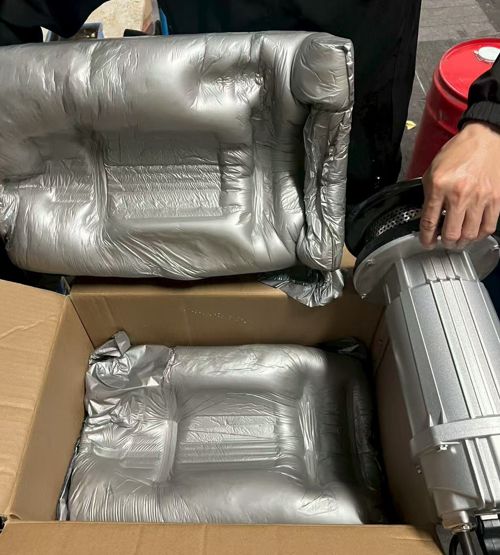
Foam-in-place mixes polyurethane A and B chemicals inside a film bag and expands immediately. A cushion layer is laid at the carton bottom first; the body is placed in, an isolation layer is kept over the flange sealing face so the foam does not press directly on it, then extra foam is filled around the body and port areas, lightly pressed for 3-5 seconds to set. Once cured, the foam matches the product outline. Covers or plugs are kept over flow channels and ports to keep debris out. No tooling or die is required, so a product change does not mean a new insert investment.
Real results and cost
For pump and valve fluid, automotive parts and machinery customers who switched from piece-by-piece inserts to foam-in-place, CosMolar observes transit damage dropping below 0.5%, with combined packaging cost down 30-50%: a single pack takes 1-2 minutes instead of 3-10, and foam material stores far more compactly than pre-made inserts. The specific protection scheme for sealing faces can be validated by sending the product for trial packing.
CosMolar is a foam-in-place packaging source manufacturer focused on irregular and fragile products, with free trial packing available. More application cases at https://www.cosmolar.com/.