 专注发泡胶整体解决方案
When choosing cushioning inserts, many customers weigh EPE foam, moulded EPS beads and foam-in-place against one another. The three options differ in cost, fit, storage footprint and cushioning performance. The right choice depends on product outline, unit weight, shipment batch size and transport mode, rather than material unit price alone.
What each material offers
EPE foam is lightweight, cuttable into pieces and relatively low in cost, suiting regular-shaped small parts. For irregular products it has to be assembled from blocks, and fit depends on how the pieces are placed by hand; under long-term pressure its rebound and support weaken over time.
Moulded EPS is formed to the product through a die and gives stable fit and cushioning for regular products. It requires tooling up front, and a product change means opening a new die; the moulded parts themselves take up warehouse space, the edges are brittle, and loose beads are common during handling.
Foam-in-place mixes A and B chemicals inside a bag and forms on the spot, wrapping the product outline 360 degrees without tooling. A changeover does not mean a new die investment. Once cured, the foam follows the product shape and cushions it from both top and bottom; the chemicals are stored in bags or drums and take up far less space than moulded inserts.
How to match the material to your product
For regular shapes, stable batches and high per-SKU volume, compare a moulded EPS scheme; for regular small parts on a tight budget, EPE is usually enough; for irregular parts, many SKUs in small batches, poor traditional fit and knock-sensitive items, foam-in-place is the better fit. Once the material is set, match foam density to product weight: 6 kg/m³ is the mainstream all-round grade, with 17 and 23 kg/m³ for heavier products, and account for whether the goods travel by sea, air or express freight.
Cost and deployment
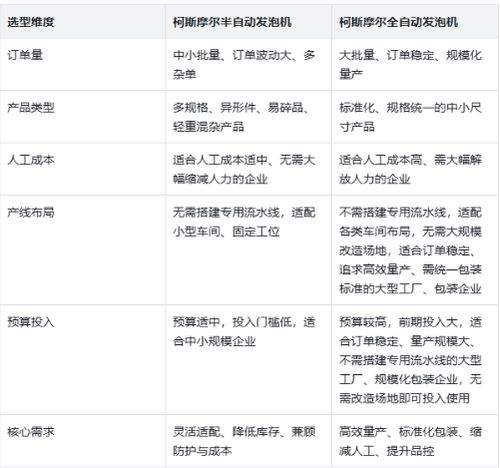
Moving to foam-in-place typically lowers combined packaging cost by 30-50%, with a single pack taking 1-2 minutes and the supporting machine usually paying back within 3-6 months. If you are unsure about the material and density combination, send the product to CosMolar for free trial packing and set the scheme from real packing-test results.
CosMolar supplies foam-in-place schemes, hand-held foam bags, semi-automatic and fully automatic foam machines, plus A/B foam chemicals and PE film as one system. More selection guidance at https://www.cosmolar.com/.