 专注发泡胶整体解决方案
When designing cushioning, many buyers assume the thicker the foam, the safer the product. In practice, cushion depth has to be matched to product weight, fragility, transit drop height and foam density: too little depth passes impact straight to the product, while too much wastes material, eats carton volume and raises per-unit cost. This article walks through the estimation logic for foam-in-place cushion depth and the density-matching principle.
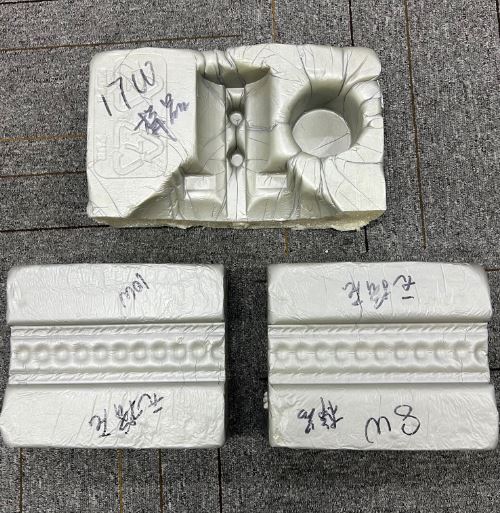
Three factors that set cushion depth
First is product weight: heavier items carry more landing energy and need thicker or denser foam to spread the impact, so the foam is not crushed through and the product hits the bottom. Second is fragility: glass optics, ceramics and precision sensors have low fragility tolerance and need a softer, thicker cushion to absorb shock; metal housings and frames that resist impact can be thinner and firmer. Third is drop height: express parcel drops are usually higher than full-container sea freight, and the cushion depth reserved should follow the packing method and handling chain.
How density and depth work together
Foam-in-place chemicals come in 6, 17 and 23 kg/m³ densities. The 6 kg/m³ mainstream grade is softer and conforms well, suited to light small parts and surfaces that mark easily; 17 and 23 kg/m³ are denser and stronger in support, for heavier products and load-bearing locating points. Depth and density complement each other: light, fragile parts use low density with enough thickness to absorb shock, while heavy parts use higher density to control deformation. It does not work to hold up a heavy part with only thick low-density foam, nor to put a thick high-density layer under a light small part that ends up hard against it.
Validate depth with trial-pack drops before rollout
Paper estimates only give a direction. Before finalizing, free trial packing is recommended: foam in the actual packing method, simulate transit drops and vibration, check for movement, marks and damage, then adjust depth and density back. CosMolar can calibrate foam dosage and density grade by product weight, outline and shipping method. More selection details at https://www.cosmolar.com/.