 专注发泡胶整体解决方案
With the same product and dispense volume, foam formed in winter and summer can look quite different: it fails to rise or turns brittle in one case, reacts too fast and scorches in another. Foam-in-place forms through a fast reaction after A and B mix, and material temperature together with workshop temperature and humidity affect reaction speed and final foam quality. This article explains the patterns and adjustment points for common workshop conditions.
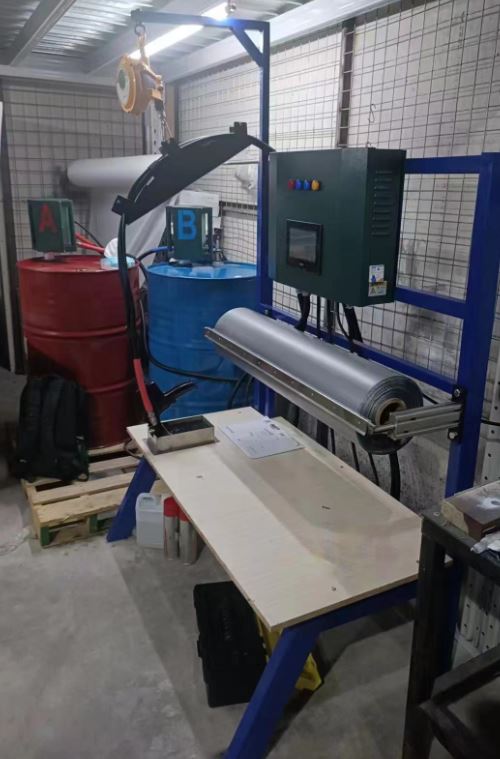
How temperature affects reaction speed and foam
When ambient and material temperature are low, the A/B reaction slows: foam rises less, sets more slowly, and the foam may be harder and more brittle with weaker outline conformance; very low material temperature also lengthens setting time and hurts packing cadence. When temperature is high, the reaction speeds up, leaving less time to place the product after dispense, and the foam may show surface scorching, uneven closed cells or local shrinkage. Density grades differ in temperature sensitivity, and heavy parts or high-density grades need closer material-temperature attention.
Humidity and ventilation effects
In a humid workshop, open drums or hose connections can absorb moisture and destabilize the A/B ratio reaction; damp conditions may also cause condensation on the product or inside the carton, weakening foam conformance. A persistently damp packing station needs ventilation, and drums should be sealed right after use so raw material does not sit exposed to air. Hot humid summers and cold winters are the two periods to watch most closely.
How to adjust and calibrate by season
Adjustment starts from trial foam: after a season change or a clear shift in station conditions, pack a sample with the real product, check rise height, conformance fullness, cure speed and foam firmness, then fine-tune dispense volume, material temperature and placement rhythm; once stable, run several consecutive packs to confirm consistency. Drum storage and handling should also avoid direct sun, heat sources or open rain exposure. CosMolar can calibrate dispense parameters to product weight, outline and density grade, and review forming performance again at seasonal changeovers. More selection and usage details at https://www.cosmolar.com/.