 专注发泡胶整体解决方案
The same product should not use the same packaging standard for a local road shipment and an overseas sea freight. Different modes differ in vibration sources, handling cycles, stacking pressure and temperature-humidity conditions, so cushion thickness, moisture layers, carton strength and foam density should be adjusted accordingly. This article walks through matching ideas for road, sea and air freight.
Road freight: short-haul vibration and repeated handling
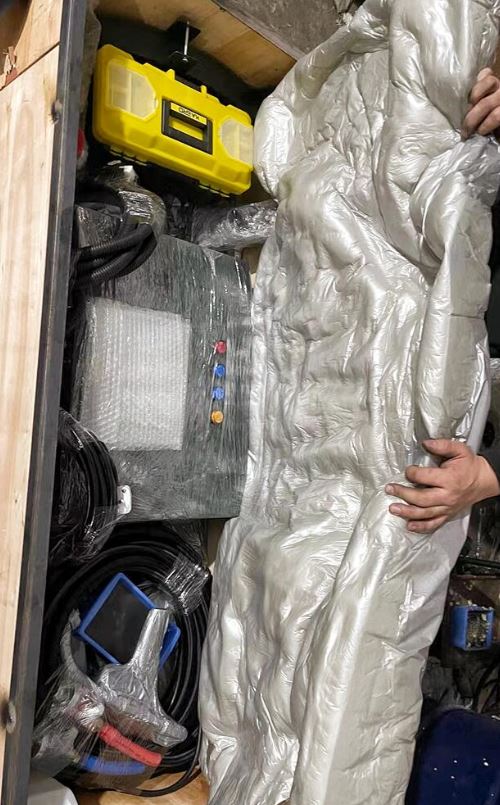
Road transit is shorter, with vibration mainly from road bumps and start-stop sway; single-piece drops are usually limited, but mid-way transfers and loading cycles can be many, so in-box shifting and edge-on-edge contact are the main risks. Packaging focuses on locating the product and a conformed insert that leaves no large empty space, to avoid sway across repeated handling. Heavy parts need bottom cushioning and carton load-bearing, with reinforced carton corners.
Sea freight: duration, humidity, salt spray and stacking load
Sea transit lasts long, with large temperature and humidity swings inside the container that can cause condensation and salt-spray exposure, and long-term stacking adds upper-cargo pressure. Packaging needs stronger moisture isolation: wrap product surfaces and connections in protective layers, and use a conformed insert to reduce trapped moisture in the box; the carton should match stacking layers in compressive strength, with bottom and top reinforcement where needed. Exposed surfaces on metal, cast iron and rust-prone parts deserve extra moisture isolation review.
Air freight: weight and volume limits, handling drops and fast turnover
Air transit is short and cabin vibration is relatively mild, but handling stages are many and single-piece drops or handling impacts cannot be ignored, while piece weight and volume are also restricted. Packaging focuses on impact cushioning and compact outline: the insert wraps in place, protruding parts are fixed, and overall volume and piece weight are controlled. Precision and fragile items can have insert thickness reviewed against drop risk.
Matching insert and density to the scenario
In practice, CosMolar assesses cushion thickness and foam density grade from product weight, outline protrusions, freight mode and carton conditions: 6kg/m³ is the general-purpose main grade, while 17kg/m³ and 23kg/m³ suit heavy parts, sea stacking or stronger support. For different routes, a sample carton is recommended first to review cushioning before mass finalization. More selection details at https://www.cosmolar.com/.