 专注发泡胶整体解决方案
Packaging work often focuses only on cushion thickness, yet misses whether the product is actually held still in the box. In real transit, a fair share of dents, scratches and broken corners comes from the product shifting: it slides side to side under vibration, and edges press against the insert, carton or other parts. This article covers locating, insert conformance and how much empty space to allow in the box.
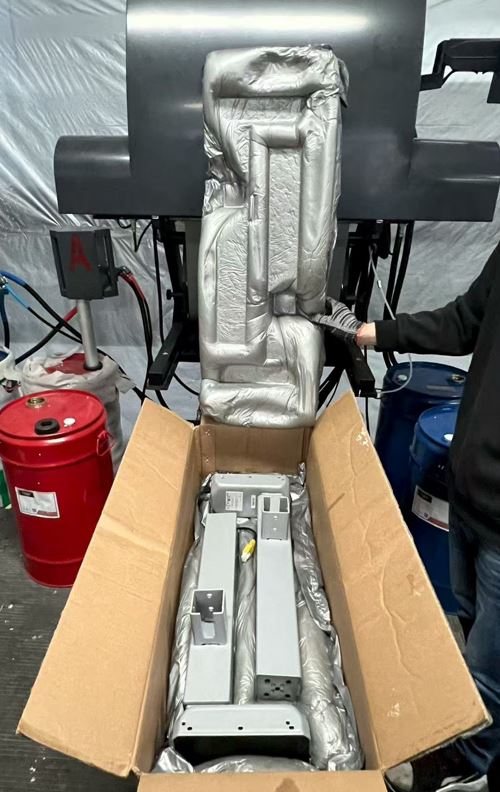
How in-box shifting happens
Common causes include: a large gap between the insert and the product so the part can move; cushioning only under the bottom with no side locating; heavy parts or products with protrusions such as handles, brackets or ports that are not fixed separately; or a soft, oversize carton that deforms under pressure. In these cases the product can still knock around even if the foam is thick.
How to judge locating and conformance
Whether the insert works is judged by conformance on all sides, not just bottom thickness: the foam insert wraps to the product outline and conforms on every side with no sliding gap; protrusions such as handles, ports and brackets are located separately rather than left floating; after placement the part cannot move freely up, down or sideways; after a 3-5 second press to set, remove the product and re-check how the insert matches the outline. The tighter the conformance, the less room there is to shift in transit.
How much empty space to leave
Gap balance should suit both removal and holding: leave the space needed to take the part in and out, but no large free-moving gap; do not pack so full that the carton is pushed out of shape, and do not leave empty room for the part to knock around. Heavy parts need stronger bottom cushioning and load-bearing, and protrusions are fixed separately; carton size should match the insert and product outline to avoid extra sway space from an oversize box.
Matching the scheme to the product
In practice, CosMolar assesses insert conformance, locating method and foam density grade from product weight, outline protrusions and freight mode: 6kg/m³ is the general-purpose main grade, while 17kg/m³ and 23kg/m³ suit heavy parts or stronger support. A sample carton is recommended first to review shifting and removal before mass finalization. More selection details at https://www.cosmolar.com/.